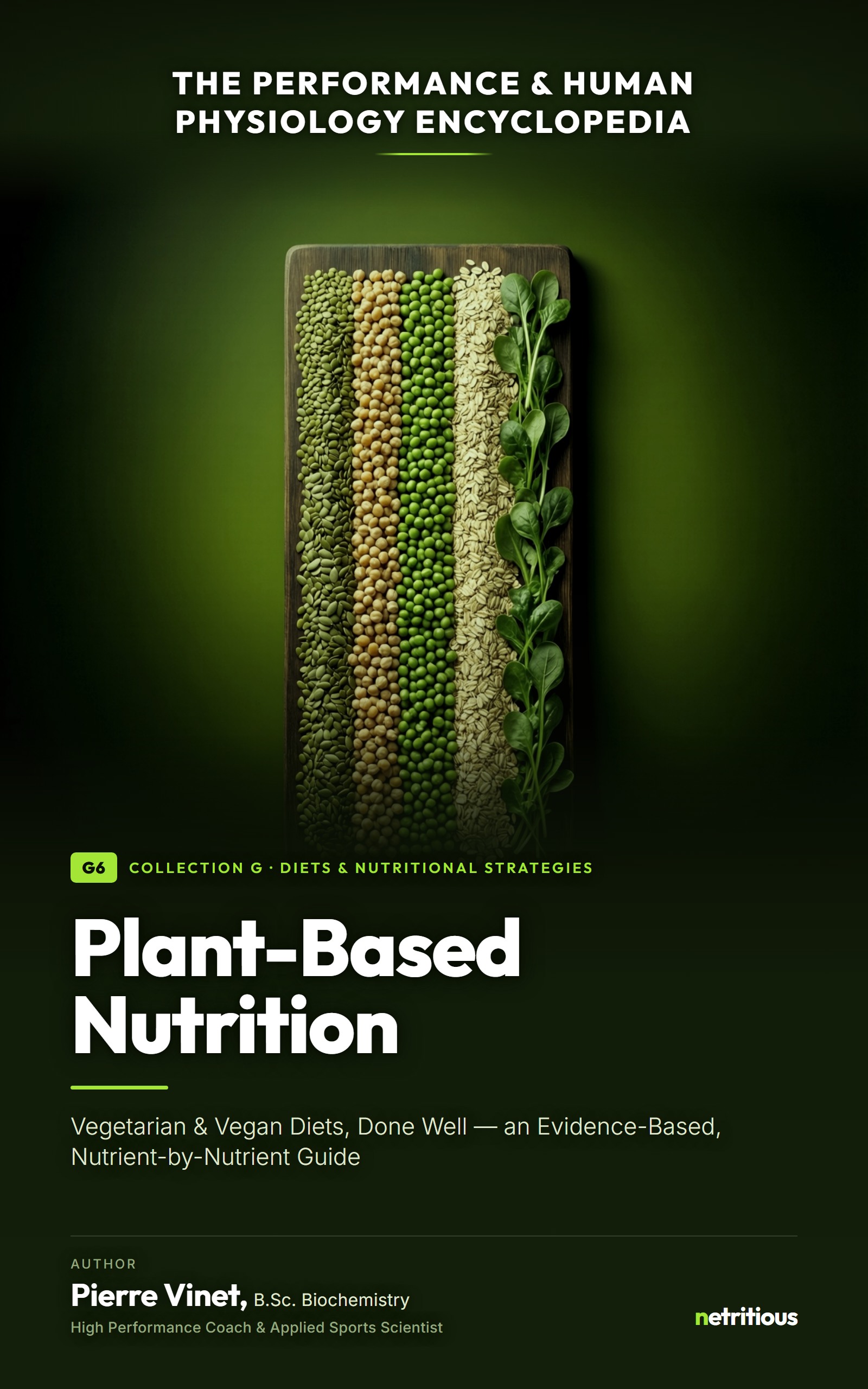
Plant-Based Nutrition
Vegetarian & Vegan Diets, Done Well — an Evidence-Based, Nutrient-by-Nutrient Guide
About this volume
Plant-Based Nutrition is Book G6 of The Performance & Human Physiology Encyclopedia — a 93-volume, university-level library on what a given way of eating really does — and for whom. It is written for readers choosing a diet, and professionals asked about them daily: deep enough that a professional already trained in the field keeps learning, structured clearly enough that a motivated reader can follow every step.
How this book is written
- University level, without dilution. Exact scientific terminology, defined at first use — mechanisms, not just conclusions.
- Evidence graded, not asserted. Major claims carry a level, from A (strong) to D (expert opinion), so you always know how much weight to give them.
- Numbers, formulas, worked examples. Reference ranges, equations and solved calculations you can apply the same day.
- Myths tested against the evidence. Where a popular claim does not survive the evidence, the book says so — and shows why.
- References at the end of every chapter. Sources cited in APA 7 style, plus a master bibliography.
For general information and education only; not medical advice. Consult a qualified health professional before acting on its content.
Read an excerpt
From Chapter 1 — What Plant-Based Eating Is — and Isn't
"'Plant-based' is one of the most-used and least-defined words in nutrition. To one person it means a vegan who reads every label; to another, a flexitarian who skips meat on Mondays. Before we can ask whether these diets are healthy, build muscle, or suit an athlete, we have to be precise about what we are talking about — and clear-eyed about two opposite myths: that going plant-based automatically makes you healthy, and that it inevitably leaves you deficient."
Plant-based eating is one of the fastest-growing nutrition trends, surrounded by some of the loudest claims in both directions. This book gives you the mechanisms, numbers, and evidence to do it well — to capture the real benefits while planning around a short, well-characterized list of nutrients of concern. Whether you eat this way, are considering it, or support others who do, the goal is the same: competence, not ideology.
What is inside
The 13 chapters of this volume.
- 01
What Plant-Based Eating Is — and Isn't
- 02
Why People Go Plant-Based: Health, Ethics, and the Environment
- 03
The Health Evidence
- 04
Protein on a Plant-Based Diet
- 05
Vitamin B12: The Non-Negotiable
- 06
Iron, Zinc, and the Minerals from Plants
- 07
Calcium, Vitamin D, and Bone Health
- 08
Omega-3 Fatty Acids
- 09
Building a Well-Planned Plate
- 10
Plant-Based Diets Across the Life Span
- 11
The Plant-Based Athlete
- 12
Myths, Controversies, and Processed Plant-Based Foods
- 13
Putting It Into Practice
Volume details
Topics covered
- b12 iron calcium iodine supplements
- eating without meat or fish
- algae omega-3 for meatless eating
- protein sources without meat
- meal planning without animal foods
- deficiencies after giving up meat
- meatless diet for athletes
Get this volume
Available on Amazon as a Kindle ebook.