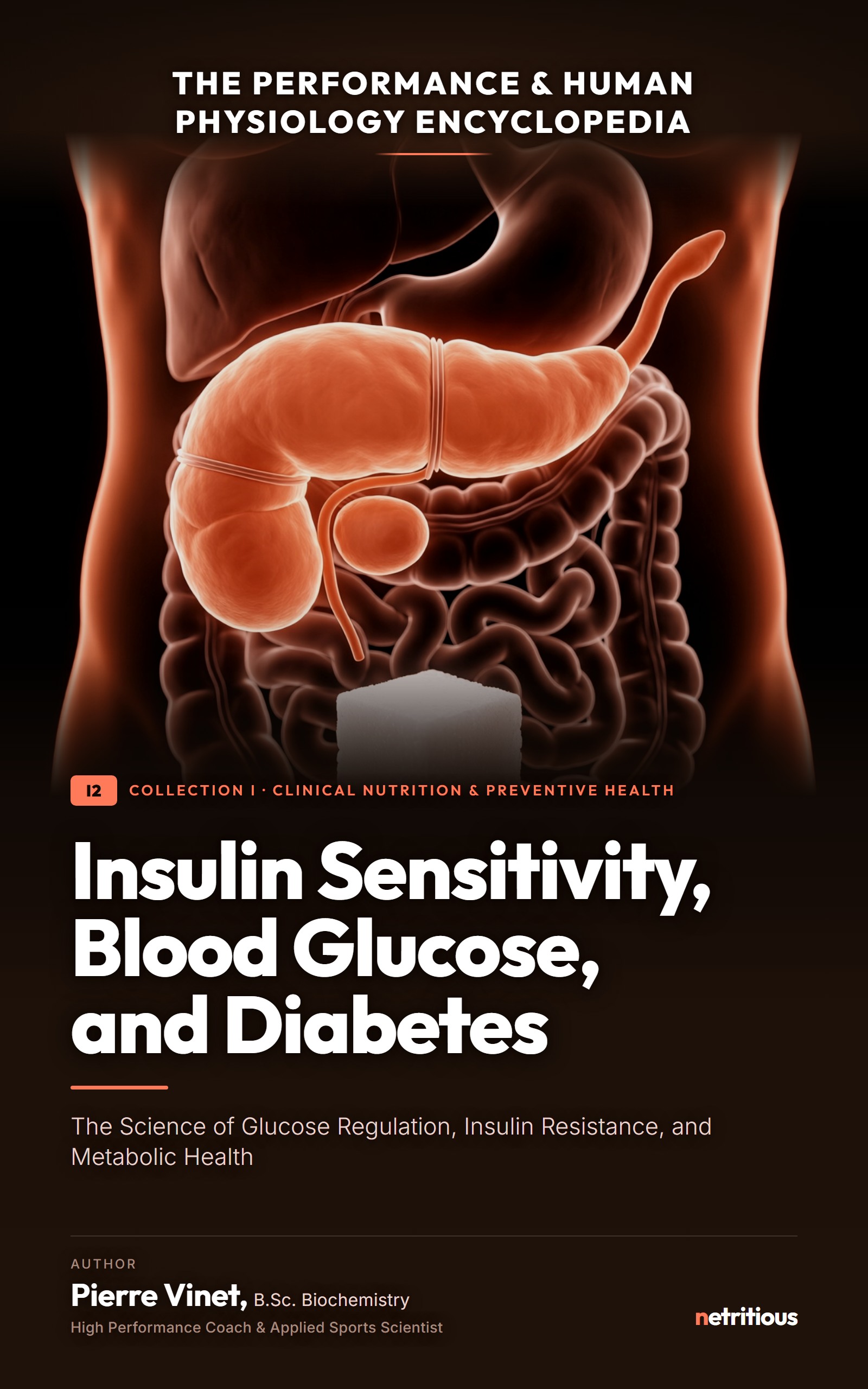
Insulin Sensitivity, Blood Glucose, and Diabetes
The Science of Glucose Regulation, Insulin Resistance, and Metabolic Health
About this volume
Insulin Sensitivity, Blood Glucose, and Diabetes is Book I2 of The Performance & Human Physiology Encyclopedia — a 93-volume, university-level library on food as medicine, applied honestly to a specific condition. It is written for dietitians, health professionals, patients and preventive-minded readers: deep enough that a professional already trained in the field keeps learning, structured clearly enough that a motivated reader can follow every step.
How this book is written
- University level, without dilution. Exact scientific terminology, defined at first use — mechanisms, not just conclusions.
- Numbers, formulas, worked examples. Reference ranges, equations and solved calculations you can apply the same day.
- Myths tested against the evidence. Where a popular claim does not survive the evidence, the book says so — and shows why.
- References at the end of every chapter. Sources cited in APA 7 style, plus a master bibliography.
For general information and education only; not medical advice. Consult a qualified health professional before acting on its content.
Read an excerpt
From Chapter 1 — Blood Glucose, Insulin, and the Metabolic Health Crisis
"There is a single number, measured from a drop of blood, that predicts more about your long-term health than almost any other: your blood glucose. Keep it in its narrow, healthy range and the machinery of metabolism hums quietly in the background. Let it drift upward for years — as it now does in a large fraction of the population — and it silently corrodes the eyes, kidneys, nerves, and arteries. This book is about that number: what controls it, why it goes wrong, and how — through food, movement, sleep, and weight — it can usually be brought back into balance."
Blood-glucose regulation sits at the center of metabolic health. The hormone that controls it, insulin, is the body's master anabolic (storage and growth) signal, so its dysfunction radiates outward into nearly every chronic disease of affluence: type 2 diabetes, cardiovascular disease (Books A5, I1), fatty liver, polycystic ovary syndrome, and even some cancers and dementias are linked to insulin resistance. Understanding this one system explains an enormous amount about modern health — why type 2 diabetes has become a global epidemic, why prediabetes is so common and so under-recognized, why diet and exercise are genuinely powerful "medicine" here (more so than for almost any other condition), and why kidney failure, blindness, amputations, and heart attacks so often trace back to years of elevated glucose. It is also the area of nutrition most saturated with hype and misinformation — "glucose spikes," continuous glucose monitors marketed to healthy people, "blood-sugar-balancing" supplements, and viral "anti-spike" tricks. This book gives you the real physiology so you can separate genuine, evidence-based metabolic health from marketing — whether you are managing your own glucose, supporting your training, or guiding others.
What is inside
The 13 chapters of this volume.
- 01
Blood Glucose, Insulin, and the Metabolic Health Crisis
- 02
Glucose: The Fuel and the Tightly Regulated Variable
- 03
Insulin: The Master Anabolic Hormone
- 04
Glucagon and the Counter-Regulatory System
- 05
The Fed and Fasted States: Whole-Body Glucose Homeostasis
- 06
Insulin Resistance: The Central Lesion
- 07
From Insulin Resistance to Type 2 Diabetes: Beta-Cell Failure and the Natural History
- 08
The Diabetes Spectrum: Types, Diagnosis, and Monitoring
- 09
Complications: Why High Blood Glucose Harms the Body
- 10
Carbohydrates, Diet, and the Glycemic Response
- 11
Beyond Carbs: Whole-Diet, Weight, and Nutritional Strategies for Insulin Sensitivity
- 12
Exercise, Sleep, Stress, and the Non-Dietary Levers
- 13
Putting It All Together: Prevention, Management, and Evidence-Based Practice
Volume details
Topics covered
- prediabetes and type 2 lifestyle
- HbA1c and continuous glucose monitoring
- glycemic index and carbohydrate response
- pancreas beta cell function explained
- hypoglycemia and counterregulatory hormones
- weight loss and type 2 remission evidence
- cardiovascular risk and visceral fat
Get this volume
This volume is in production. This page will carry the link the day it goes on sale.